Finding a mark on a marble countertop or granite vanity can be frustrating, especially when ordinary cleaning does not remove it. The first step is not to reach for a stronger chemical. It is to identify what kind of mark you have. A stain that has entered the stone behaves differently from a surface residue, a scratch, or an etched patch caused by acid. The right response depends on the stone, the source of the mark, and the finish. A careful approach can prevent a small problem from becoming permanent damage.
Begin by identifying the mark
Look at the color, shape, and location. A dark spot near cooking oil may suggest an oil-based stain. A colored ring from a drink could involve pigments, moisture, or acid etching. Rust-colored marks near metal fixtures may have a different cause. A dull, light-colored patch on polished marble may be etching rather than staining. Note when the mark appeared and what products have already been used. This information is useful if you later consult a stone-care professional.
Clean the surface gently first
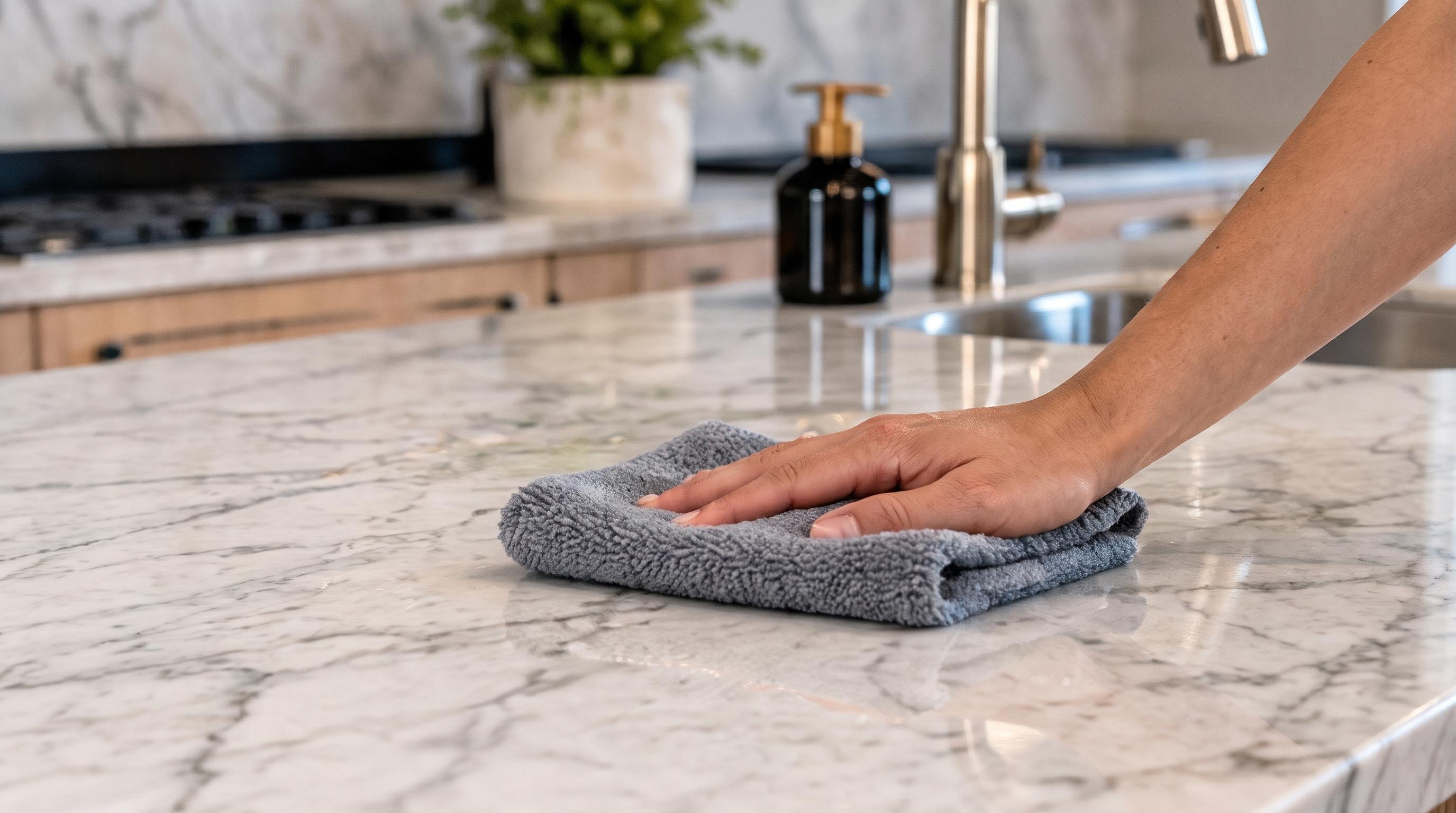
Remove loose debris and wipe the area with a pH-neutral cleaner approved for the stone. Follow the label, rinse if required, and dry with a clean microfiber cloth. This can remove residue that is sitting on top of the surface rather than absorbed into it. Do not scrub with abrasive pads or try multiple household chemicals in succession. If the mark remains after normal cleaning, pause and reassess. Repeated cleaning with the wrong product can alter the finish without removing the underlying problem.
Oil-based stains need a different approach
Cooking oils, grease, lotions, and some cosmetics can darken absorbent stone. These marks may require a stone-specific treatment designed to draw out the contaminant. Professional poultices are sometimes used, but the correct formulation depends on the stain and stone. Avoid applying random solvents or homemade mixtures. Some chemicals can discolor a surface, affect a sealer, or create ventilation and safety risks. For a large or persistent oil stain, consult a qualified stone restoration professional.
Food and beverage stains are not all alike
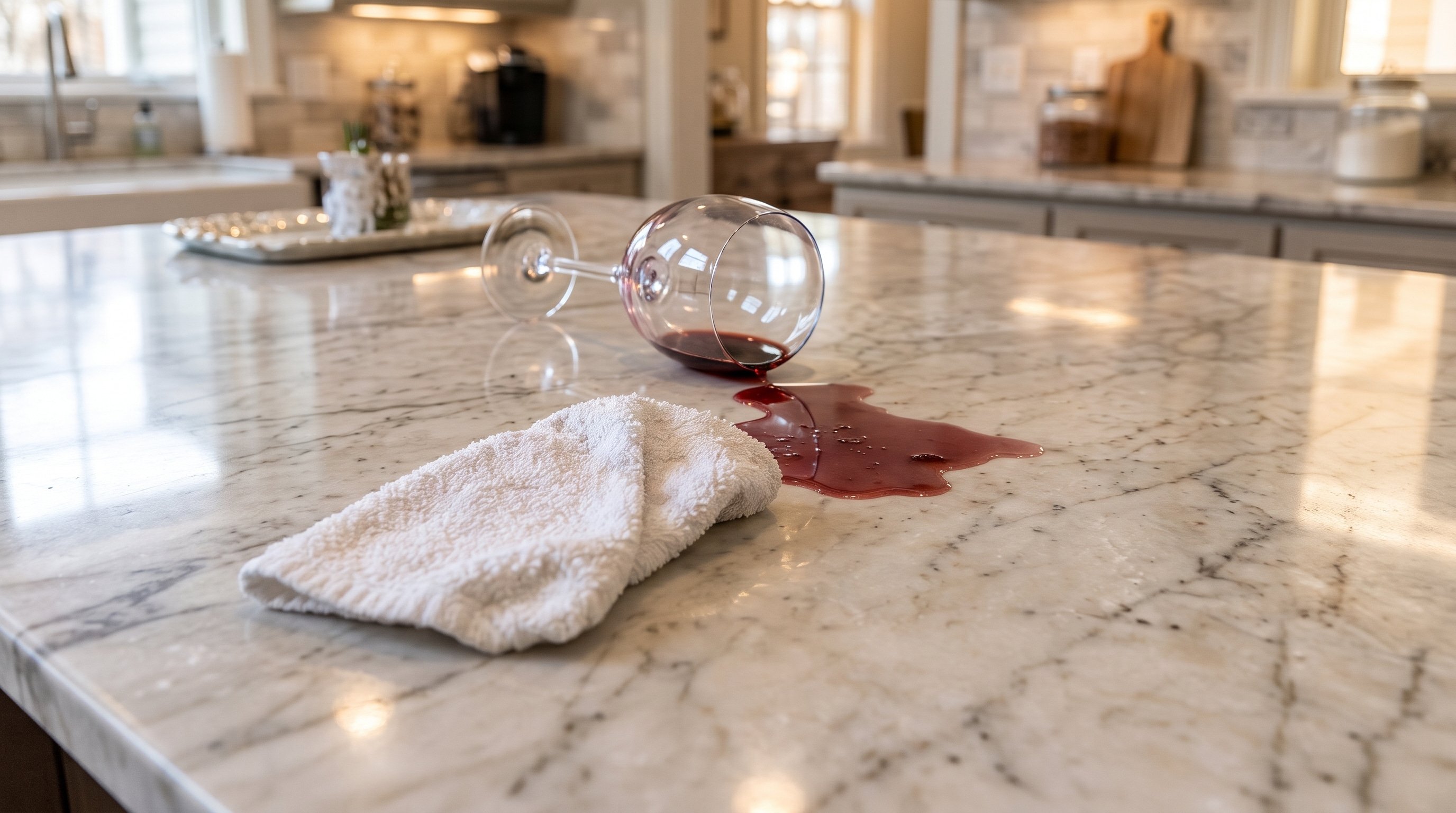
Coffee, tea, wine, juice, and sauces may leave pigments or cause chemical reactions. On marble and other calcium-based stones, acidic liquids can etch the finish, creating a dull area that will not disappear with ordinary stain remover. Blot spills promptly and clean with a compatible product. If discoloration remains, determine whether it is a true stain or etching. A restoration professional may recommend different treatment for each. The key is to avoid treating every ring as a simple spill residue.
Rust and metal marks require caution
Rust-colored stains may come from metal objects, fixtures, or minerals within or near the stone. Rust treatments can be chemically aggressive and are not appropriate for every stone. Acid-based rust removers can damage marble, limestone, and travertine. Do not apply a generic bathroom rust remover without checking compatibility. If the source is a leaking fixture or metal contact, address that issue as well or the stain may return. Persistent rust staining is a good reason to seek professional advice.
Water marks, mineral deposits, and darkening
A temporary dark spot after water exposure may fade as moisture evaporates, but persistent darkening can suggest absorption or moisture trapped beneath the surface. White deposits near wet areas may be mineral buildup or efflorescence, each with different causes. Do not assume an acidic descaler is safe for stone. Check for leaks, failed caulk, or prolonged moisture exposure. If a shower or floor remains damp, the underlying installation may need assessment before cosmetic treatment will be effective.
Understand the role of sealing
An appropriate impregnating sealer may slow the absorption of some liquids, making prompt cleanup more effective. It does not guarantee that stains will never occur, and it does not prevent etching. Sealing over an existing stain can complicate future treatment. Before resealing, make sure the stone is clean, dry, and suitable for the product. Ask your fabricator or a stone-care professional about the sealer used previously and the right maintenance plan for your surface.
When to call a stone restoration professional
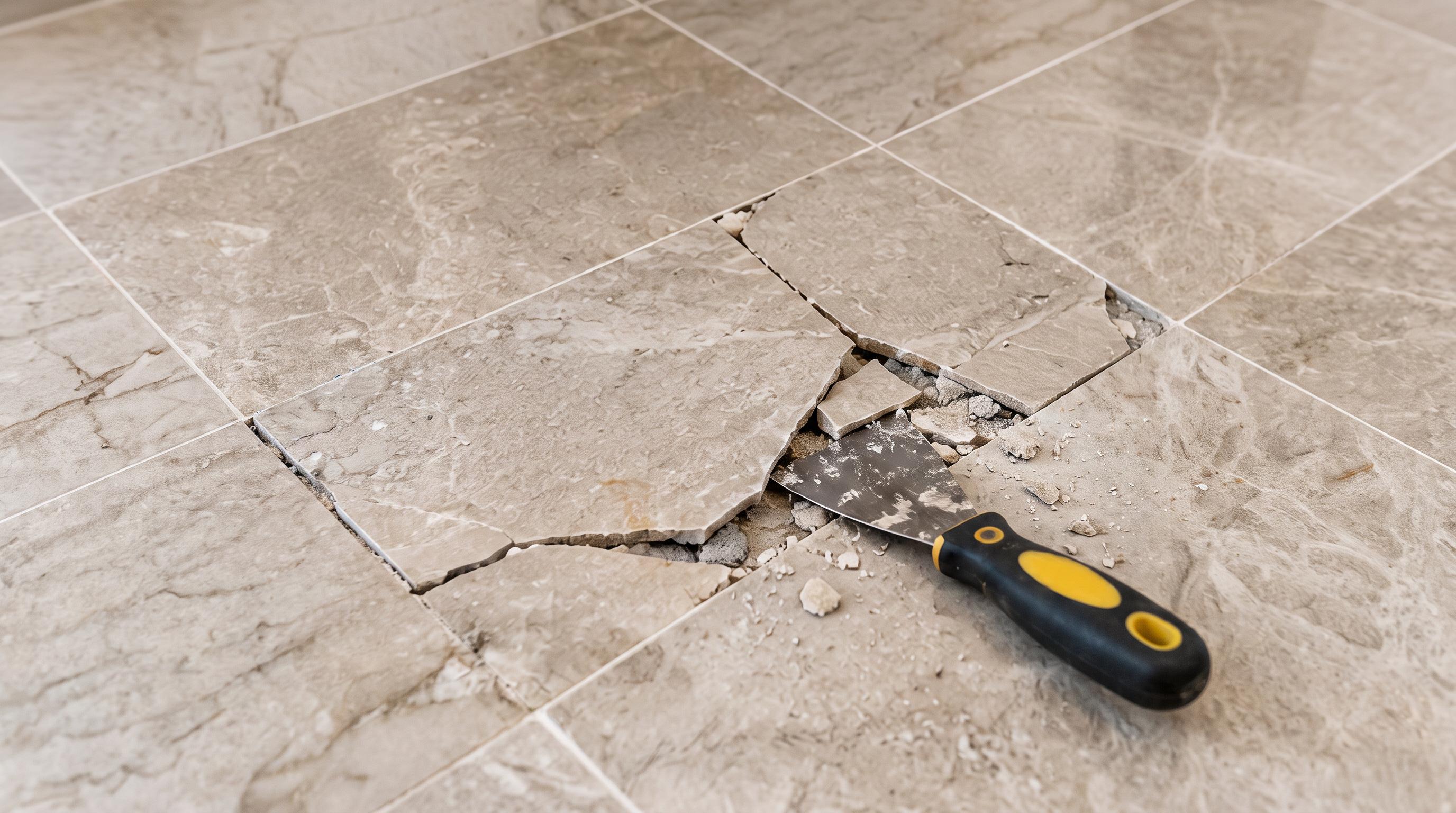
Seek professional help for widespread stains, valuable slabs, unknown chemical exposure, etched polished marble, persistent rust marks, or signs of moisture beneath the stone. A professional can evaluate the finish and recommend an appropriate treatment. This is especially important for onyx, limestone, or delicate finishes. Attempting repeated home remedies can turn a treatable problem into a more expensive repair. Take photos and provide any product information you have to make the assessment easier.
Prevent future stains with daily habits
Use coasters, trays, cutting boards, and trivets. Blot spills promptly and clean with products intended for the specific stone. Keep abrasive grit off floors and avoid leaving wet toiletries or metal containers directly on vanities. Review whether sealing is recommended for your installation. Most importantly, make sure everyone using the space knows that natural stone is not cleaned exactly like glass, ceramic, or stainless steel.
Discover natural stone in San Diego
If you are planning a new surface, visit Marble Express San Diego to compare natural stone options and discuss the practical care expectations for your project.