Marble brings a timeless, natural character to a kitchen or bathroom. Its veining and subtle variation are part of its appeal, but marble is not maintained in quite the same way as ceramic tile or engineered quartz. As a calcium-carbonate stone, it can react with acids, and many polished marbles can show scratches or dull spots from everyday use. The good news is that keeping marble beautiful does not require a complicated routine. It requires choosing gentle products, addressing spills promptly, and understanding the difference between cleaning, sealing, and repairing a surface.
Start with a gentle daily routine
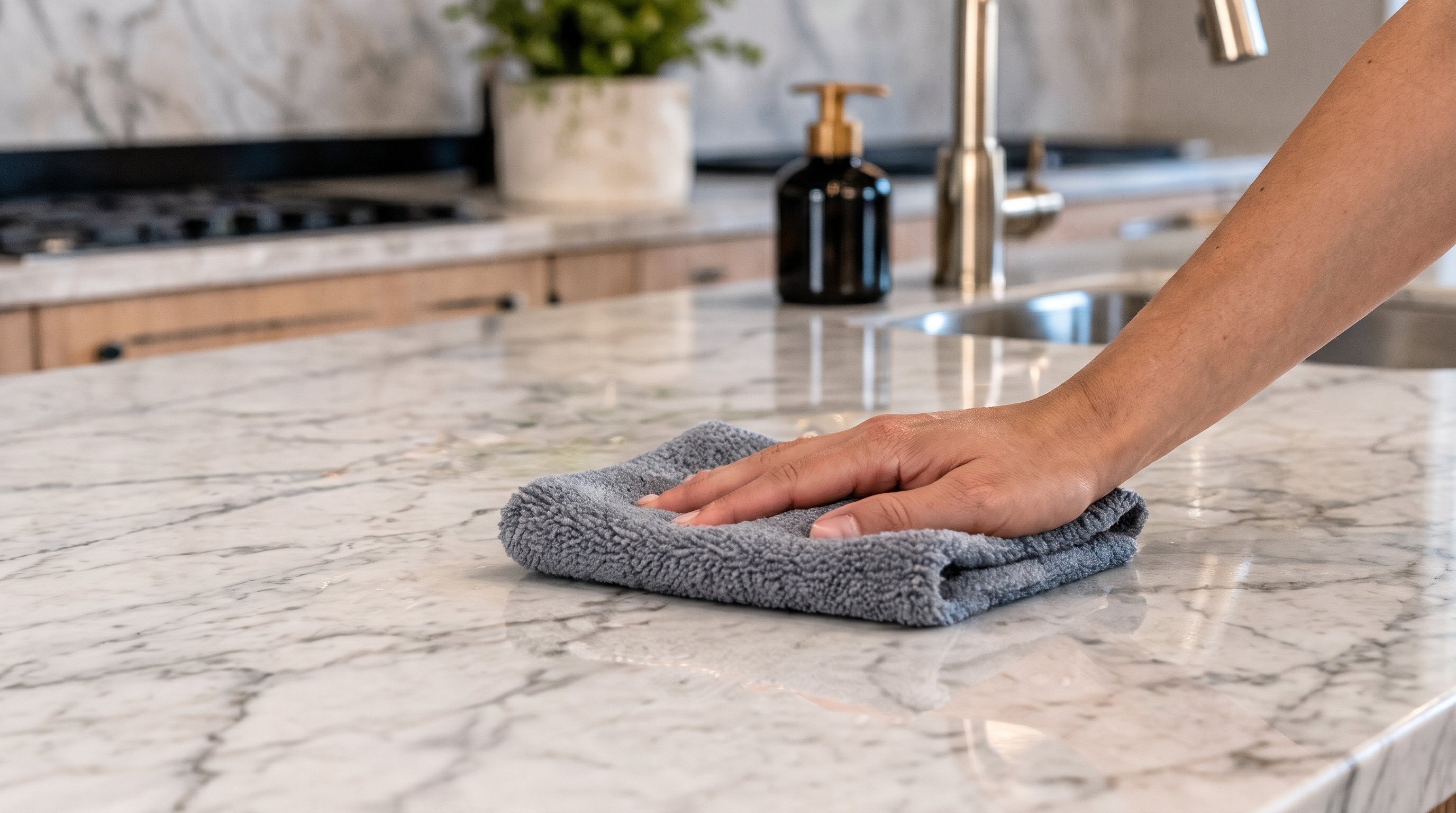
For routine cleaning, remove crumbs or loose grit first. Then wipe the countertop with a clean microfiber cloth and warm water. When additional cleaning is needed, use a cleaner specifically labeled pH-neutral and suitable for natural stone, following its instructions. A small amount of mild dish soap may be acceptable for some finishes, but too much can leave a film. Finish by rinsing away residue and drying the surface with a separate soft cloth. Drying is especially helpful around sinks and faucets, where water droplets can leave mineral marks. A gentle daily routine is more effective than an occasional aggressive scrub.
Know what never belongs on marble
Vinegar, lemon juice, and many acidic bathroom or kitchen cleaners can react with marble and create dull etched areas. Abrasive powders, rough scouring pads, and aggressive brushes may scratch polished finishes. Do not assume a product is safe because it is advertised as natural or multipurpose. Check its label for compatibility with marble and the specific finish. If you are trying a new cleaner, test it on a small, inconspicuous area and follow the manufacturer's instructions. Avoid mixing cleaning products; combinations involving bleach or ammonia can create dangerous fumes.
Handle spills before they settle
Blot liquid spills promptly with a soft cloth instead of spreading them across the counter. Coffee, wine, cooking oils, makeup, and strongly colored foods may leave stains, especially on absorbent stone. Citrus juice, tomato sauce, and vinegar can cause etching even when they do not leave a visible colored stain. After blotting, gently clean the area with a suitable stone cleaner, rinse if instructed, and dry. If a mark remains, identify whether it is a stain, an etched patch, or a scratch before choosing a treatment. The wrong treatment can make the surface worse.
Understand stains versus etching
A stain is material that has penetrated or discolored the stone. Etching is a change in the surface caused by a chemical reaction, often visible as a dull ring or cloudy spot on polished marble. A sealer may reduce absorption of certain liquids, but it does not make marble acid-proof. Stains sometimes require a stone-specific poultice, while etching may need professional refinishing. Avoid internet remedies involving vinegar, baking soda scrubs, or improvised chemicals. For valuable slabs or widespread damage, a qualified stone restoration professional is the safer option.
Protect the high-use areas
Use cutting boards when preparing food and trivets beneath hot cookware. Place coasters under glasses, particularly drinks containing citrus or alcohol. Keep soap dispensers and toiletries on trays to reduce prolonged contact with the surface. Around sinks, wipe standing water and clean spills from cleaners or cosmetics quickly. If the countertop is part of a busy family kitchen, establish a routine everyone can follow rather than relying on a long list of special products. Consistency does most of the work.
Does marble need sealing?
Many marble installations benefit from a suitable impregnating sealer, but the need and schedule depend on the stone, finish, previous treatment, and usage. Sealing is not a substitute for cleaning, and it does not stop acid etching. Ask your fabricator or stone-care professional what was applied at installation and which maintenance products are compatible. If you are unsure whether resealing is appropriate, have the surface evaluated before applying another coat. Applying an unsuitable product or excessive sealer can create unwanted residue or appearance changes.
Create a realistic weekly and monthly plan
Every day, remove grit, clean spills, and dry wet areas. Each week, inspect frequently used zones around the cooktop and sink for residue, rings, or buildup. Periodically, review the care directions for the stone and sealer used in your installation. Keep one clearly labeled stone-safe cleaner on hand so household members do not reach for acidic multipurpose sprays. If the marble has a honed rather than polished finish, remember that the way marks appear may differ, even though the basic rules about acids and abrasion still apply.
Choosing marble for your next project
Maintenance is easier when expectations are clear before the material is selected. Some homeowners love the patina marble develops over time; others prefer a more uniform appearance with less visible wear. In a showroom, compare polished and honed samples, ask about the particular slab's characteristics, and consider where it will be used. At Marble Express San Diego, visitors can explore natural stone options in person and discuss material choices with the showroom team.
Visit Marble Express San Diego
If you are exploring marble for a countertop, vanity, or other surface, visit our San Diego showroom to compare natural stone colors, finishes, and patterns in person. Our team can help you understand the selection process and discuss care considerations before you choose.