A cracked tile can be a small cosmetic issue or a warning sign of movement, impact, or moisture beneath the surface. Before attempting a quick repair, determine what caused the damage and whether the tile is safe to leave in place. A hairline crack in an otherwise stable wall tile is different from a loose floor tile in a busy hallway. Some minor cosmetic defects can be filled or disguised, but broken, sharp, loose, or repeatedly cracking tiles usually deserve more attention. This guide explains the options without assuming every problem is a simple do-it-yourself fix.
First, inspect the damage and surrounding area
Look closely at the crack's width, length, and location. Check whether the tile moves under gentle pressure, whether neighboring tiles are also cracked, and whether grout joints have separated. For floors, consider whether the damaged tile sits near a doorway, heavy appliance, or area that may experience movement. In showers and wet rooms, watch for moisture, discoloration, soft substrates, or persistent odors. Avoid walking barefoot on a tile with sharp edges. If the floor feels unstable or water intrusion is suspected, stop cosmetic repairs until the underlying issue is assessed.
Why tiles crack in the first place
Common causes include a dropped object, movement in the substrate, poor support beneath the tile, improper installation, thermal expansion, or building movement. A single chip after an impact may be isolated. A line of cracks across several tiles can indicate a larger problem. Tiles may also break when an uneven surface creates a hollow or unsupported spot. Repairing only the visible crack without addressing movement can lead to another failure. A qualified tile installer can help diagnose recurring cracks and determine whether the substrate or waterproofing needs attention.
When a small cosmetic repair may be enough
For a stable tile with a tiny chip or hairline cosmetic crack in a dry, low-risk area, a repair product designed for that tile may improve appearance. Color-matched fillers or specialty repair kits can sometimes make a minor defect less noticeable. Read the manufacturer's instructions and understand that a cosmetic patch does not restore the tile's original structural strength. Repairs can also age differently from the surrounding glaze or stone. Avoid using generic glue, caulk, or grout as a universal fix; these products are not interchangeable and may fail or discolor.
Signs that replacement is the better choice
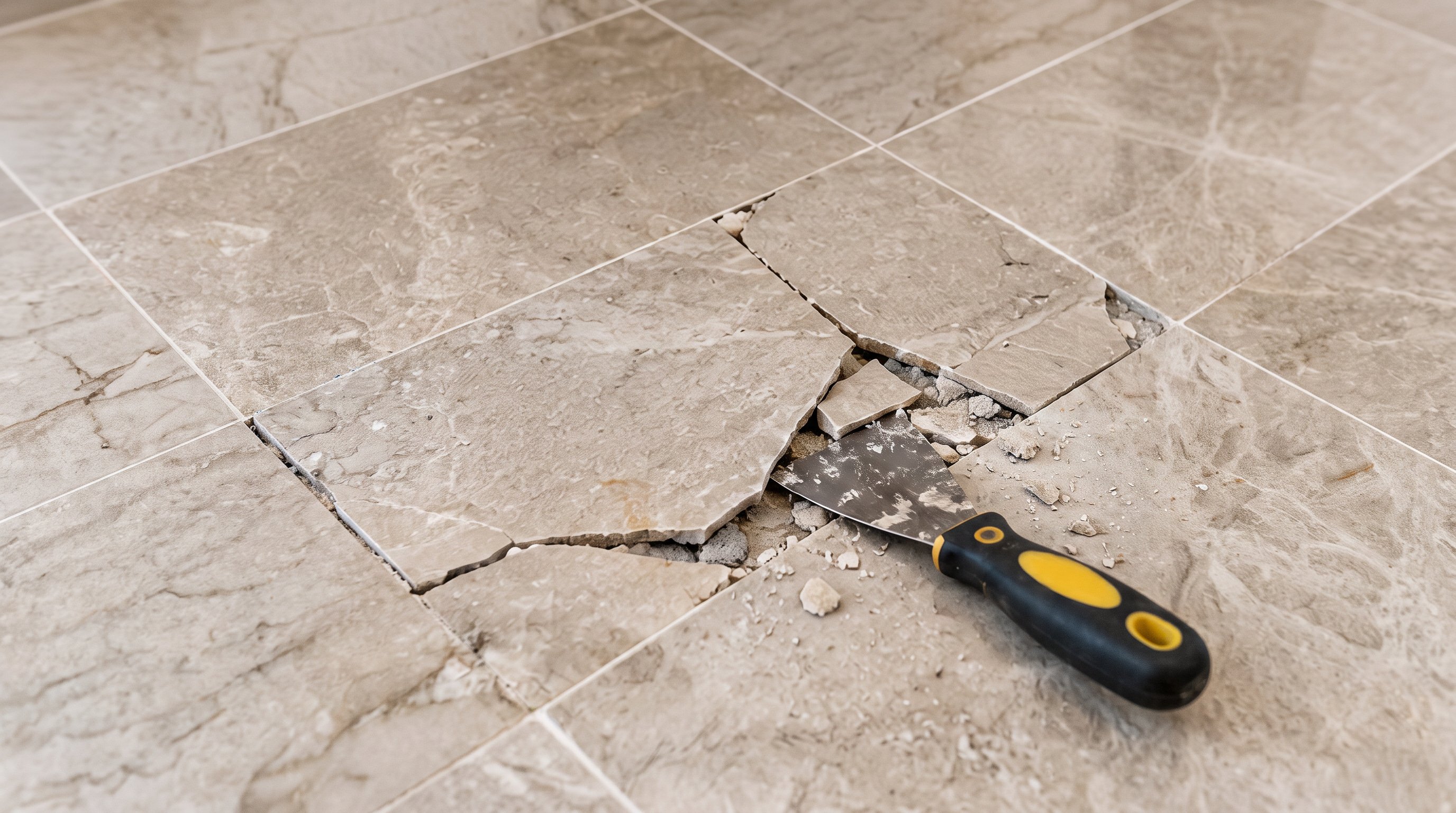
Replacement is generally preferable when a tile is broken into pieces, has sharp edges, is loose, rocks underfoot, or has a crack that continues to grow. It is also worth considering when the damage is prominent and a cosmetic patch would be distracting. In showers or other wet areas, replacement must be planned carefully so waterproofing is not compromised. A broken tile may be only one part of the repair. If there is evidence of water damage or substrate movement, a professional assessment is particularly important before any demolition begins.
What a proper replacement involves
A qualified installer typically protects adjacent finishes, removes the damaged tile carefully, prepares the substrate, checks for sound support, and installs a suitable replacement using compatible materials. The grout is then restored and allowed to cure according to product instructions. Exact methods depend on the tile, adhesive, substrate, and location. DIY removal can damage nearby tiles or waterproofing, especially in showers. If you choose to attempt the work yourself, follow the relevant installation system guidance, use appropriate protective equipment, and avoid disturbing materials that may present health risks in older buildings.
How to find a matching tile
Matching is often the hardest part. Tile batches can vary in shade, size, surface texture, and finish, even within the same product line. Check for leftover boxes or spare pieces from the original installation. Look for the manufacturer, product name, color, nominal size, caliber, and lot information. Photograph the existing tile in daylight and indoor lighting, but do not rely on photos alone for color matching. Bring a spare tile or sample to a showroom when possible. For natural stone, expect variation in veining and tone because no two pieces are identical.
What if the original tile is discontinued?
A close match may be possible, but sometimes a deliberate design change looks better than a near match. Depending on the room, a border, accent, or larger section replacement can create a more intentional result. A designer or installer can advise on layouts that work with existing dimensions and transitions. In highly visible areas, consider how light will reveal differences in gloss and texture. A new tile with the same color name may still look noticeably different beside an aged floor. Compare physical samples before ordering materials.
Prevent future damage
Protect floors from heavy impacts and use furniture pads. Address loose grout and movement early rather than waiting for more tiles to crack. Keep wet areas properly maintained, including sealants at appropriate movement joints. Do not assume a stronger tile alone will fix a moving substrate. For a renovation, select a tile appropriate for the location and ask the installer about substrate preparation, expansion accommodation, and applicable installation standards. A good material and a sound installation work together.
Find materials for your next project
Marble Express San Diego is a stone and tile showroom, not a tile repair service. If you need replacement material or are considering a refreshed design, visit the showroom to explore available tile and stone options.