Natural stone can be a beautiful part of a San Diego home, from a marble bathroom vanity to a granite kitchen countertop or a quartzite statement surface. Every slab has its own character, and different materials need different kinds of care. Whether you live near the coast, farther inland, or simply want your surfaces to stay looking their best, the fundamentals are the same: use compatible cleaners, prevent avoidable damage, and understand when sealing or professional maintenance may be appropriate. This guide brings the most useful habits together in one place.
Start by knowing your stone
Marble, granite, quartzite, limestone, travertine, and onyx are all natural stones, but they do not behave identically. Marble and limestone can react with acids, while granite and quartzite vary in absorption and finish characteristics. A polished surface may show marks differently from a honed or textured finish. If you are unsure what material you have, check installation paperwork or ask the supplier or fabricator. Correct identification helps you choose safe cleaners and avoid applying a treatment intended for a different stone.
Keep daily cleaning simple
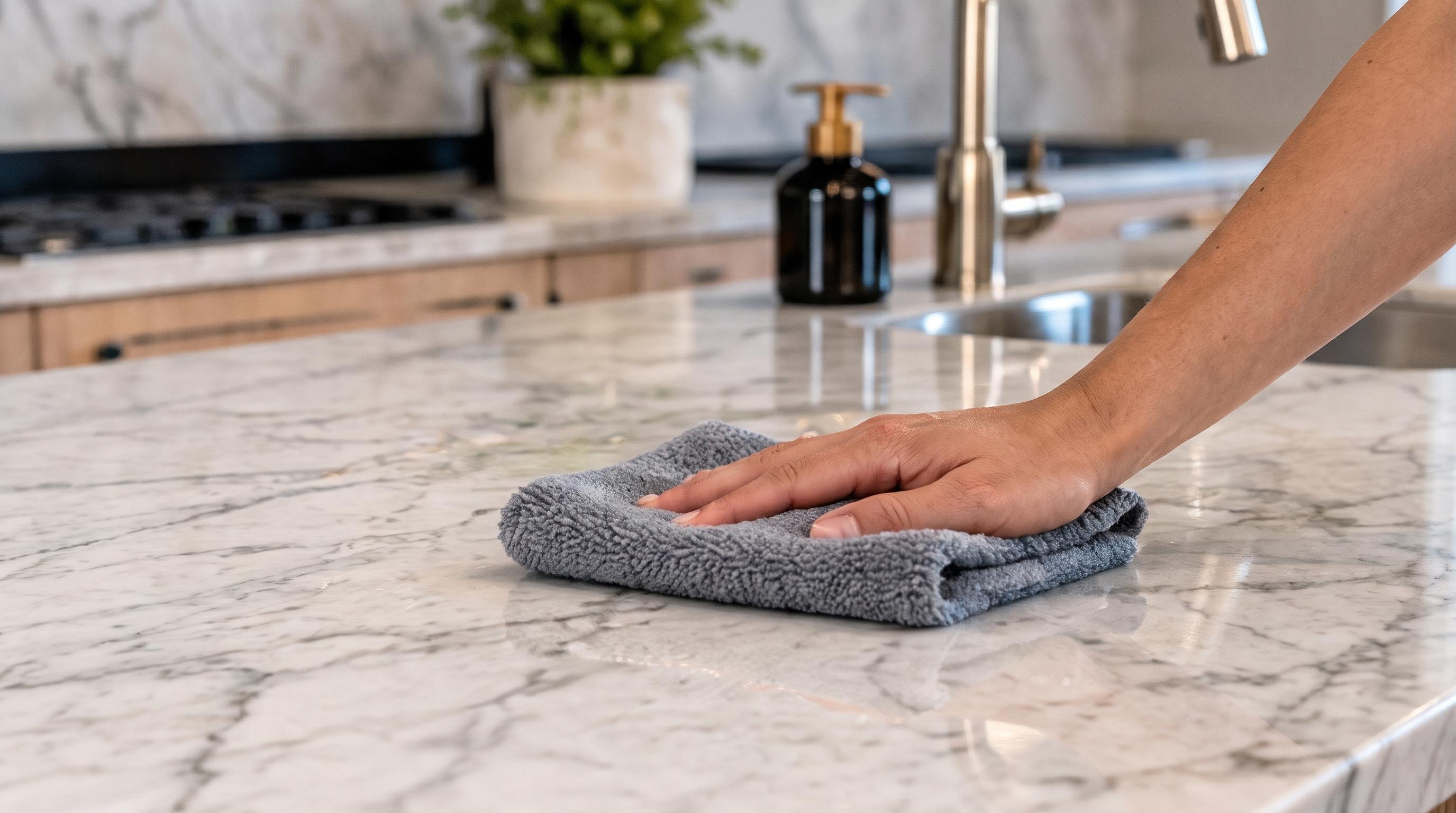
For routine care, remove grit and crumbs, then wipe with a clean microfiber cloth and warm water or a pH-neutral cleaner labeled for the specific stone. Follow the manufacturer's directions and dry wet areas when practical. Avoid vinegar, lemon juice, abrasive powders, and harsh multipurpose sprays on sensitive stone. Do not mix chemicals. In kitchens, clean food splashes promptly; in bathrooms, wipe up toiletries and standing water. The goal is steady, gentle maintenance rather than frequent deep cleaning.
Protect kitchen countertops
Kitchen stone faces frequent contact with food, drinks, utensils, and cookware. Use cutting boards rather than chopping directly on the surface, and place trivets beneath hot pots and pans. Keep coasters nearby for drinks containing citrus, wine, or other acidic ingredients. Blot spills instead of spreading them. Sealing may help some stones resist absorption, but it does not prevent scratches or acid etching. If you enjoy the natural patina of marble, care still matters; it simply means accepting that some signs of use may develop over time.
Give bathroom vanities special attention
Vanities are exposed to water, toothpaste, cosmetics, soap, perfume, and cleaning products. Some of these can stain or etch natural stone. Place bottles and dispensers on trays, wipe standing water around faucets, and use stone-compatible cleaning products. Be cautious with limescale removers because many are acidic. If you notice persistent darkening around a sink or seam, investigate possible moisture exposure rather than treating it only as a surface stain. Proper installation and maintenance of sealants are also important.
Care for stone floors and entryways
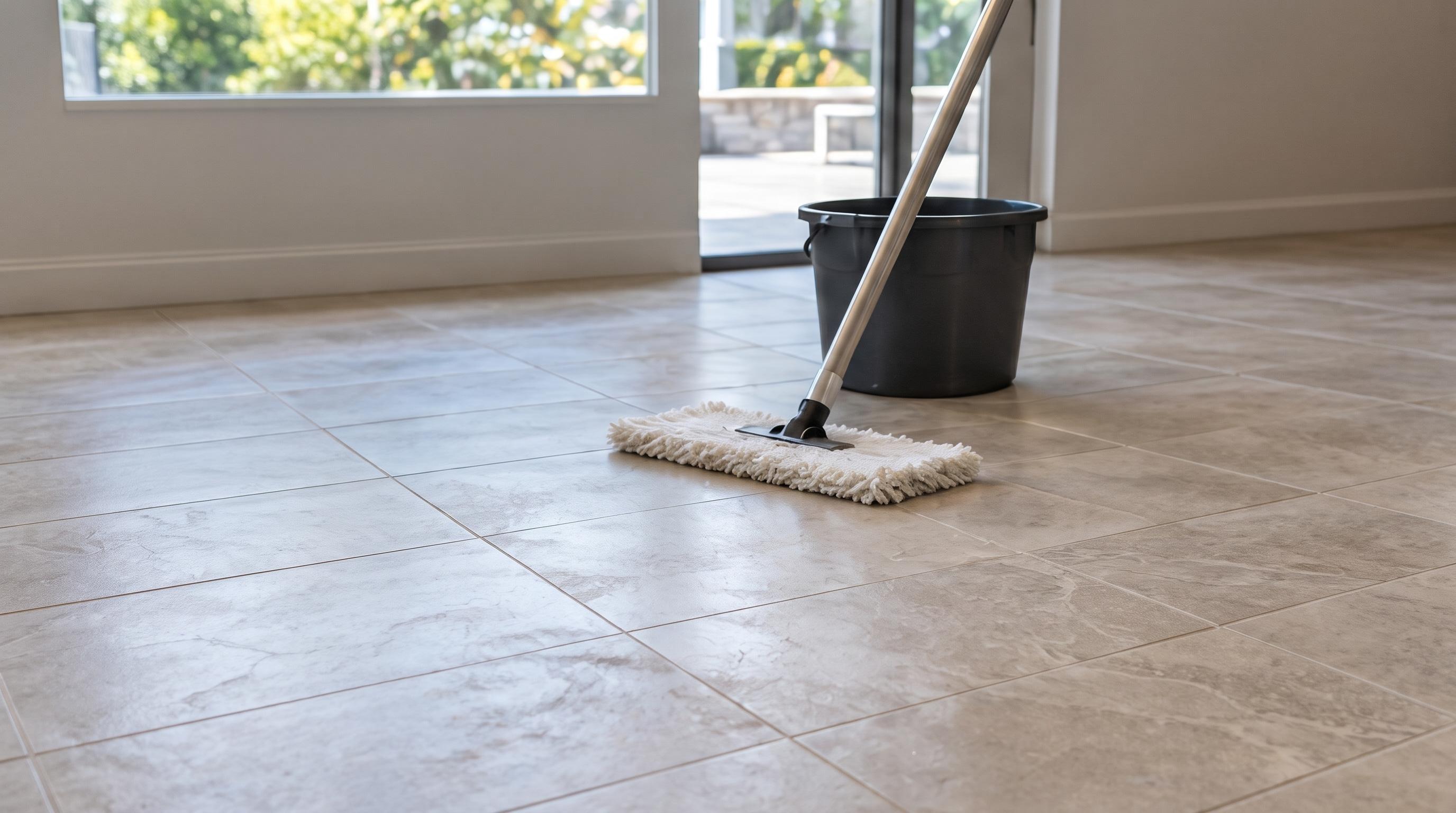
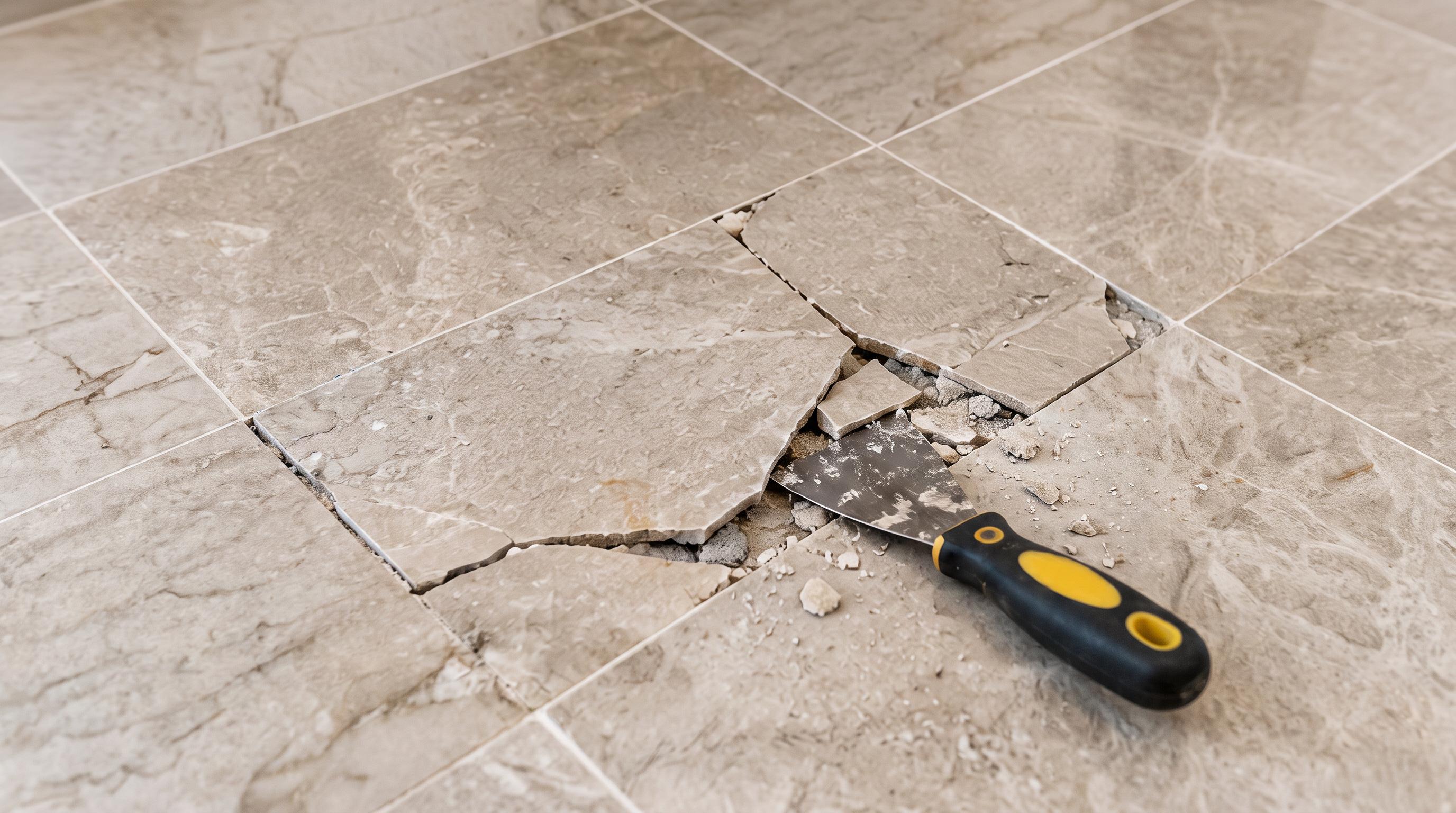
Fine grit tracked in from outside can scratch sensitive stone finishes. Place suitable mats at entrances and use felt pads beneath furniture. Sweep or vacuum with a hard-floor setting before mopping. Choose a pH-neutral stone floor cleaner and avoid flooding the surface. In high-traffic areas, inspect grout and movement joints periodically. A well-maintained stone floor depends on both the material and the condition of the installation. If tiles become loose or grout repeatedly cracks, have the underlying issue evaluated.
What San Diego's coastal conditions can mean
Homes near the ocean may experience salty air, moisture, and tracked-in sand, while inland homes may deal with dust and outdoor grit. These conditions do not create a single special cleaning formula, but they reinforce the value of frequent dry soil removal, prompt drying, and appropriate maintenance. On outdoor stone, product suitability for the location, weather exposure, slip resistance, and installation details matter. Ask a qualified professional about outdoor applications and follow the stone supplier's recommendations rather than assuming an indoor care routine is sufficient.
Sealing: useful for some stones, not all
Many natural stone installations may benefit from a suitable impregnating sealer, but the need and timing vary with the stone, finish, previous treatment, and usage. Sealing can slow absorption of some liquids; it does not make stone acid-proof or eliminate maintenance. Ask what sealer was applied and follow its instructions. Do not assume that all natural stone needs yearly sealing. Engineered quartz, many porcelain tile surfaces, and ultracompact surfaces generally have different maintenance requirements, so avoid applying natural stone treatments based on appearance alone.
Recognize stains, etching, and scratches
A stain changes the stone's color, often because something has been absorbed. Etching changes the surface itself and can look like a dull ring on polished marble. Scratches are mechanical marks. These problems require different approaches. If gentle cleaning does not remove a mark, stop before trying aggressive products. Document what caused it and consult a qualified stone-care professional when necessary. Professional restoration may be appropriate for certain etched or damaged finishes.
Choose materials with maintenance in mind
A showroom visit is a chance to look beyond photographs. Compare polished and honed finishes, inspect the natural variation between slabs, and think about how the material will be used. Homeowners who prefer minimal maintenance may want to compare natural stone with porcelain or engineered surfaces. Designers and contractors may also need to consider installation requirements, thickness, edge details, and intended applications. Ask about current inventory and product-specific guidance before finalizing a selection.
A practical maintenance checklist
Keep a stone-safe cleaner and microfiber cloths accessible. Remove grit from floors frequently, blot spills quickly, and use coasters and trivets. Inspect grout, seams, and sealants periodically. Save the product and sealer information from your installation. When a mark appears, identify it before treating it. These simple habits are more reliable than following a single cleaning trick for every surface in the house.
Visit Marble Express San Diego
Explore marble, granite, quartzite, and other surface options at Marble Express San Diego, 8485 Production Ave. Compare physical materials, ask questions about care, and discover surfaces suited to your project.